Pectineus Muscle
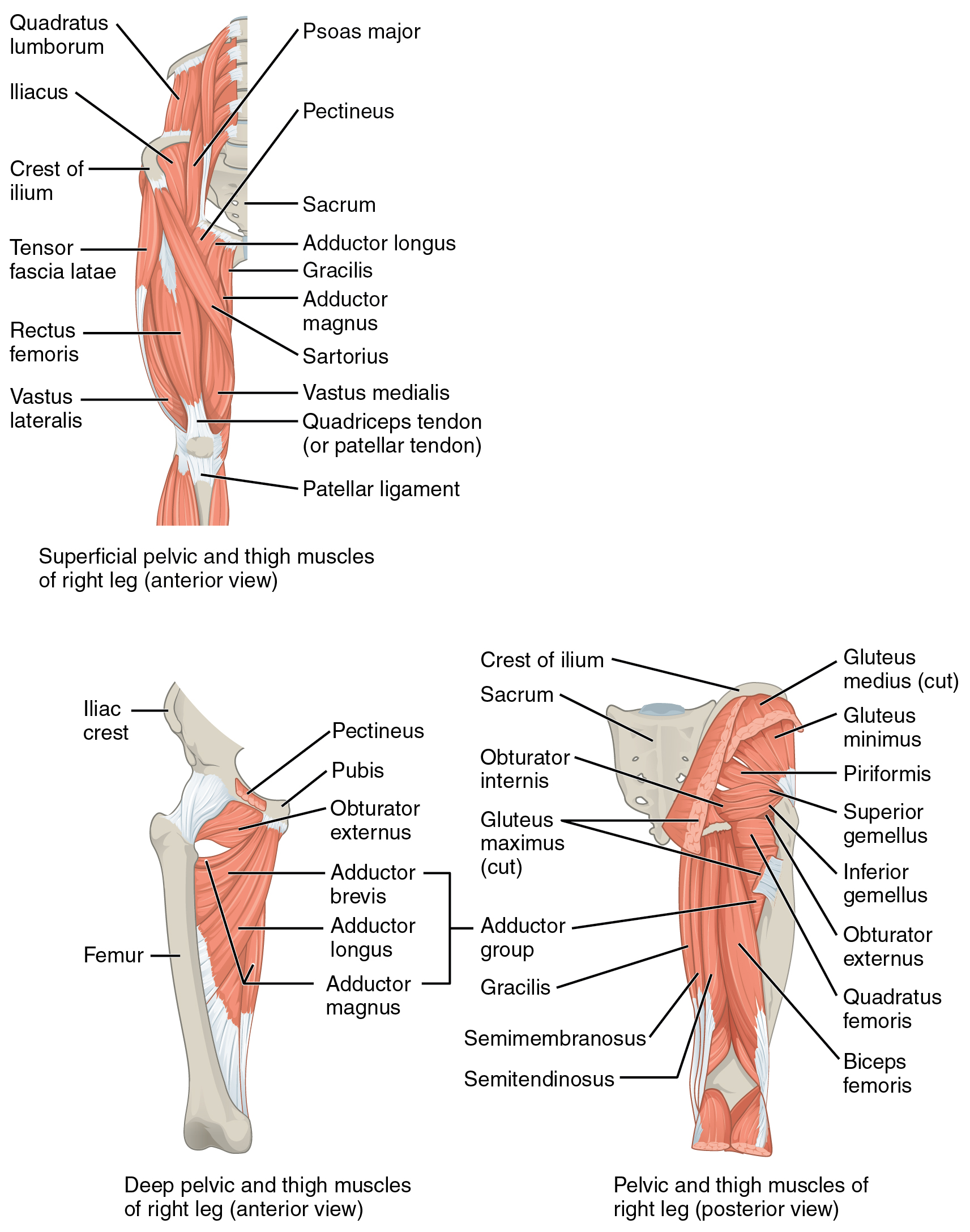
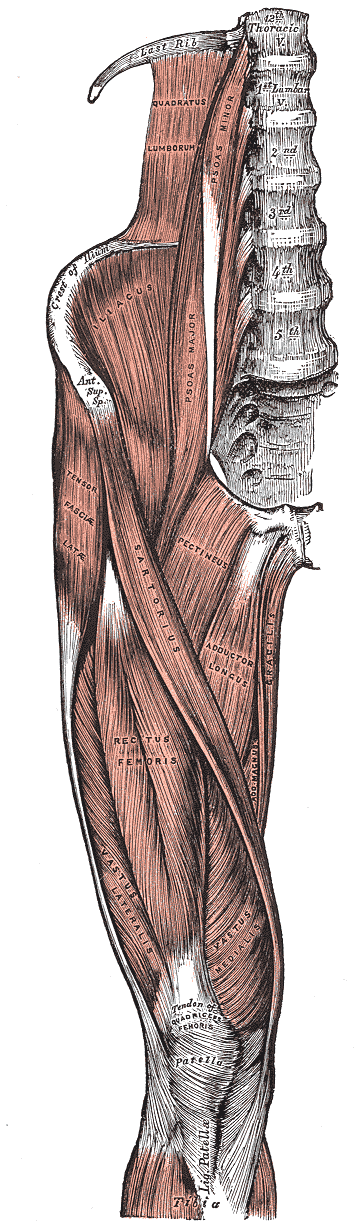
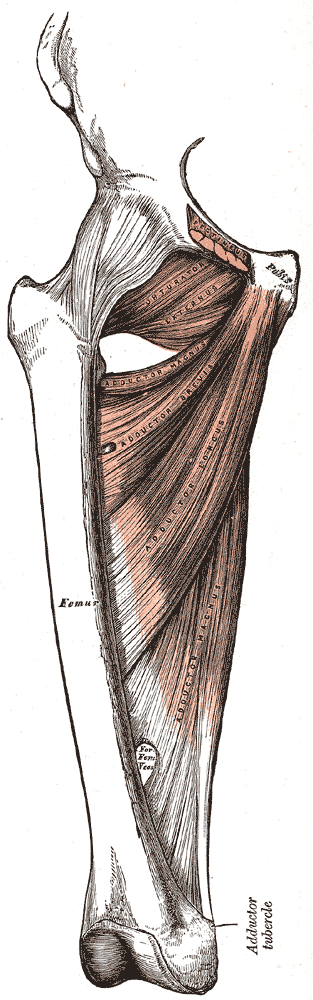
| Muscle | Origin | Insertion | Innervation | Action |
|---|---|---|---|---|
| Pectineus | Pecten pubis | Pectineal line Proximal linea aspera |
Femoral n. Obturator n. L2 - L3 |
Hip: ER, Adduction, *slight* Flexion Pelvis: Frontal plane stabilization, Sagittal plane stabilization |
Origin
Pecten Pubis6
Insertion
Femur (pectineal line and proximal linea aspera)6
Innervation
- Femoral N., ref-obturator-nerve (L2, L3)6
Action
- Hip joint: ER (when >30-40° hip IR), ADD, slight flex
- Pelvis: Stabilization in coronal and sagittal plane
At ~30-40° of internal rotation, the pectineus runs exactly inferior to the center of the joint, and thus stops functioning as an external rotator7. When the hip is internally rotated past 40°, the pectineus generates an external rotation torque7.
Palpation
See how to palpate this muscle along with other adductor muscles here.
References
1.
Betts JG, Blaker W. Openstax Anatomy and Physiology. 2nd ed. OpenStax; 2022. https://openstax.org/details/books/anatomy-and-physiology-2e/?Book%20details
2.
Gray H. Anatomy of the Human Body. 20th ed. (Lewis WH, ed.). Lea & Febiger; 1918. https://www.bartleby.com/107/
3.
Donnelly JM, Simons DG, eds. Travell, Simons & Simons’ Myofascial Pain and Dysfunction: The Trigger Point Manual. Third edition. Wolters Kluwer Health; 2019.
4.
Neumann DA, Kelly ER, Kiefer CL, Martens K, Grosz CM. Kinesiology of the Musculoskeletal System: Foundations for Rehabilitation. 3rd ed. Elsevier; 2017.
5.
Weinstock D. NeuroKinetic Therapy: An Innovative Approach to Manual Muscle Testing. North Atlantic Books; 2010.
6.
Gilroy AM, MacPherson BR, Wikenheiser JC, Voll MM, Wesker K, Schünke M, eds. Atlas of Anatomy. 4th ed. Thieme; 2020.
7.
Jones B. B Project Foundations. b Project; 2025.
Citation
For attribution, please cite this work as:
Yomogida N, Kerstein C. Pectineus Muscle. https://yomokerst.com/The
Archive/Anatomy/Skeletal Muscles/Lower limb muscles/Thigh Muscles/Medial
Thigh Muscles/pectineus_muscle.html